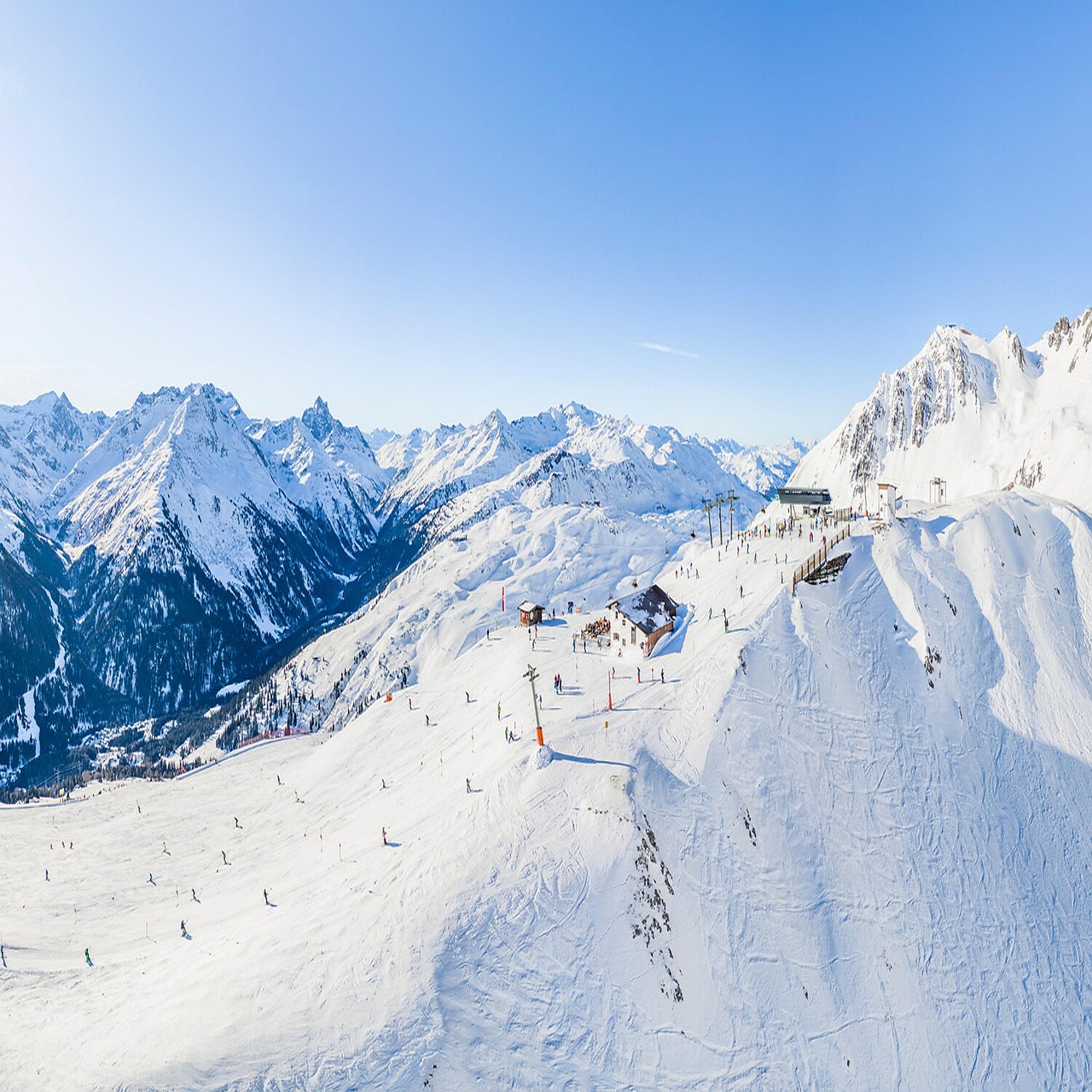
Photo by alpenatureski on Pixabay
Spring Skiing: Why March and April Are the Best Months
Lower prices, thinner crowds, softer snow, and better light. The case for booking your ski trip after February half-term instead of during it.
I’ve done two February half-term ski trips in my life. Both times I’ve stood in a 45-minute queue for a six-person gondola, paid restaurant prices that required brief mental arithmetic before ordering, and spent at least two days skiing behind a crocodile of children who were learning to snowplough in front of me on a blue run.
I’m not going back to February half-term. March is better in almost every respect and I’ll make the case for it here.
Why February half-term is the way it is
French ski resorts are priced around UK and French school holidays. British February half-term, French Vacances de Février (which runs across three zones over several weeks), and school holidays from the Netherlands, Belgium, and Scandinavia all converge on the same resorts in the same three-to-four-week window. Supply doesn’t increase. Demand doubles.
The results are predictable: higher prices, longer lift queues, busier pistes, and less availability in the better accommodation. This isn’t a complaint. It’s just the reality of how the ski industry works. If you have school-age children, you’re mostly stuck with peak weeks. If you don’t, you have no reason to be there.
What changes in March
Prices drop. Meaningfully. For a self-catered apartment in a French resort, the difference between the first week of March and February half-term is typically 25–35%. Flights are similarly cheaper. Transfer costs fall slightly as operators have more capacity. Over a week for two people, the cost difference can be £400–600.
Queues shorten. Dramatically. The main half-term traffic starts to clear by early March. By mid-March, a resort like Alpe d’Huez or La Plagne feels noticeably less crowded. By April, you’ll find days where the mountain feels almost private.
Snow quality improves, in ways that matter. The counterintuitive truth about spring skiing is that the snow conditions are often better than mid-winter. This requires a bit of unpacking.
In January and February, the snow is frequently cold and firm: great for carving if you’re an advanced skier, unforgiving if you’re not. Falls hurt more on hard-pack. In March and April, the snow softens during the day, particularly on south-facing slopes, creating a more forgiving surface that’s easier to learn on, less punishing to fall on, and more enjoyable for recreational intermediate skiing. The condition has a name: “spring corn snow,” and once you’ve skied it on a warm afternoon in bright sunshine, you’ll understand why people plan trips specifically around it.
The light is better. This sounds trivial and it isn’t. In January, the sun is low, the days are short, and the light is often flat, making it genuinely harder to read the terrain ahead of you. By March, the days are longer, the sun is higher, and the light is clearer. You see the mountain properly. Your shadow is in front of you, not at your feet.
You ski better. For recreational skiers, warmer temperatures and easier conditions mean you relax more and ski better. I consistently ski better in March than January for reasons I can partly attribute to physical (softer snow, more forgiving), partly mental (less pressure, better visibility).
The consideration: snow reliability
The one genuine caveat for spring skiing is snow reliability on the lower slopes. In warm springs, runs below about 1,800m can become patchy or thin by April. For a resort like Morzine (village at 1,000m) or Les Gets (village at 1,172m), late April is a gamble.
The answer is altitude: if you’re planning a spring trip, prioritise resorts with good high-altitude skiing. The mountain above 2,000m will hold snow reliably until well into April.
The best resorts for spring skiing from the Midlands
Alpe d’Huez is the most logical choice. It sits at 1,860m with skiing up to 3,330m, faces south (maximum sun), and averages more sunny days per season than almost any other resort in the French Alps. In March it’s frequently warm enough to ski in a light fleece at lower altitude. The Sarenne glacier and the runs off the Pic Blanc give reliable snow until late April.
Tignes is the most snowsure resort in the French Alps. The Grande Motte glacier at 3,456m provides reliable snow from October to May. In April, when other resorts are starting to look uncertain on the lower runs, Tignes above 2,500m is typically in excellent condition. The resort lacks some of the charm of purpose-built villages, but for pure spring snow reliability, it’s hard to beat.
Val d’Isère has the combination of altitude, glacier access (the Pissaillas glacier), and terrain variety that makes it excellent in spring. The Espace Killy (the linked area with Tignes) gives you plenty of options even if some lower runs are thinning. The resort is expensive, but spring prices are meaningfully lower than peak weeks.
La Plagne above Belle Plagne holds snow well into April. The Bellecôte glacier (high point around 3,250m) provides reliable skiing throughout spring and the Belle Plagne village base at 2,050m means the main runs stay in condition long after lower resorts have problems. Good option for spring if you want a friendlier price than Val d’Isère or Tignes.
Verbier in April is often cited by experienced skiers as the best time to visit: warmer temperatures, thinner crowds, reliable snow above 2,500m, and the possibility of spring powder days after late-season snowfall. It’s expensive but not as eye-watering in April as it is in February.
What to watch for
Lift opening hours. Resorts start reducing their lift hours and operating days from early April. Some lifts may only run on weekends, or cut their hours from 9am–5pm to 9am–4pm. Check the resort’s lift operating schedule before you book accommodation.
Some restaurants close early. Mountain restaurants in particular may stop operating from mid-April. Not universal, but worth factoring in if you’re planning to eat on the mountain.
Afternoon slush. On hot spring days, the run quality on south-facing lower slopes in the afternoon can deteriorate significantly into wet, heavy snow that’s tiring to ski on and not particularly enjoyable. The fix is easy: ski in the morning when the surface is firm, have a long lunch, and either ski in the shade or stop early. This is not a hardship.
Book flights earlier than you think. Spring prices are lower because demand is lower, but that doesn’t mean the best fares stay available indefinitely. The Midlands airports have limited capacity on ski routes and the good combinations (Chambéry direct, early Saturday morning) still sell out. Book spring trips in autumn rather than waiting until January.
When to go: the week that makes most sense
Mid-March to early April is the sweet spot for most Midlands skiers doing a spring trip. You’ve cleared the French school holiday period, the snow above 2,000m is reliable, the days are long and bright, and prices are noticeably lower than peak weeks.
The first week of April is excellent at high-altitude resorts (Tignes, Val d’Isère, Alpe d’Huez): lower than peak prices, almost no queues, and the mountain to yourself on weekday mornings. The risk of running into reduced operating hours starts to increase from mid-April onwards.
The simple version: if you don’t have school-age children, don’t ski in February. Go in March. You’ll pay less, wait less, and ski better.