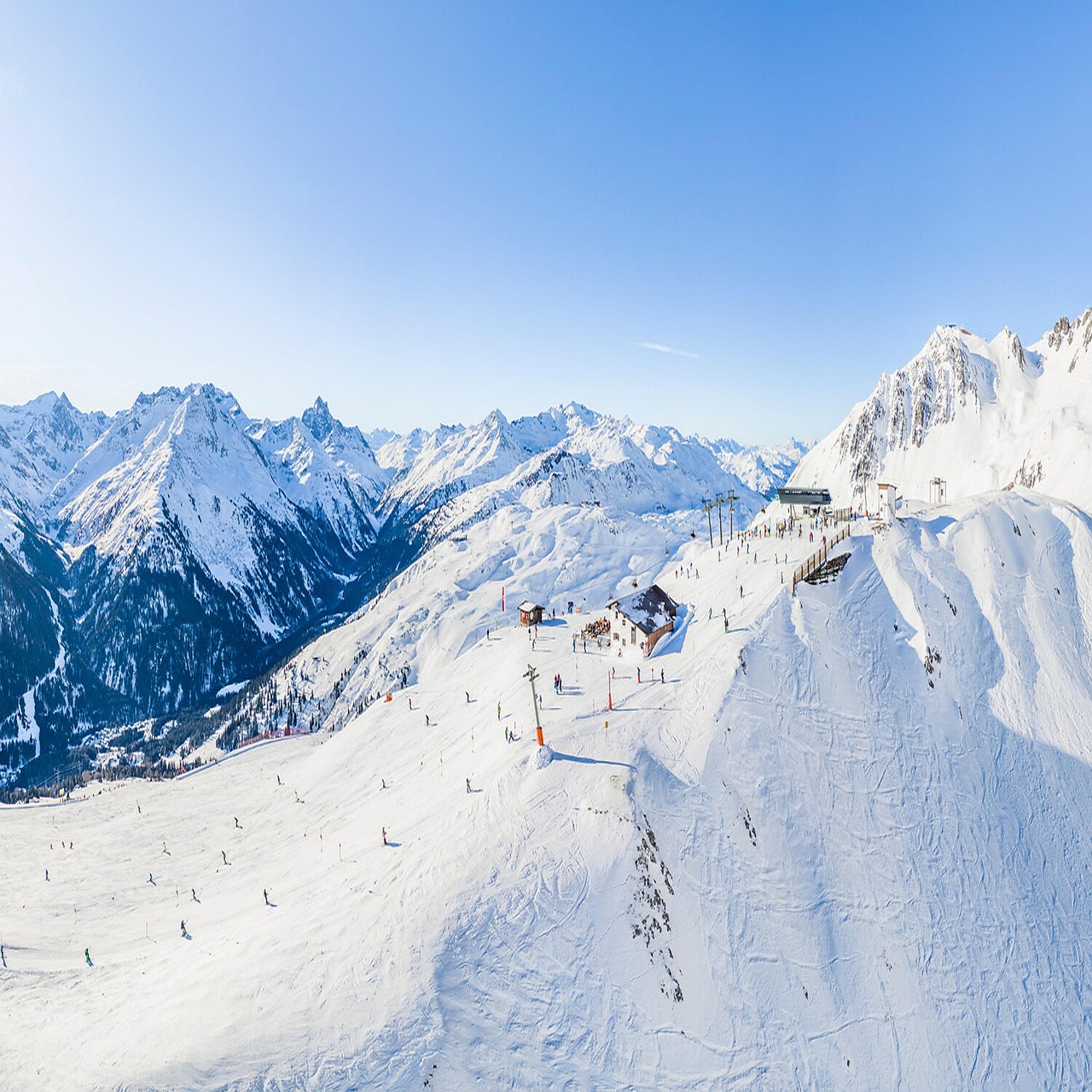
Photo by alpenatureski on Pixabay
The 8 Best Ski Resorts for Beginners from the UK Midlands
Good ski schools, gentle terrain, and resorts accessible from the Midlands. The best resorts for first-time skiers, with honest practical advice.
The first ski resort you go to matters more than most people realise. Go to the wrong one (too large, too icy, too little green and blue terrain, a ski school that teaches in French and moves faster than you’re ready for) and you can have a genuinely miserable week that puts you off the sport permanently. Go to the right one and you’re back within twelve months planning the next trip.
I’ve been to a lot of resorts over the years. The eight below are the ones I’d recommend for a first or second trip from the Midlands, taking into account the specific constraints of flying from East Midlands or Birmingham Airport, budgeting for a week, and needing a resort that actually works for mixed ability groups.
A few things that matter for beginners that I’ve weighted in these picks:
Good ski school: An ESF (École du Ski Français) that’s organised, has English-speaking instructors, and can handle adults learning from scratch. The difference between a good ski school and a mediocre one is significant.
Enough beginner terrain: Green and gentle blue runs that give you somewhere to practise without being in the way of fast intermediates. Some resorts have this well-designed; others don’t.
Not too large: A huge resort is overwhelming on a first trip. You want to feel like you’re starting to understand the mountain by day four, not still confused about which lift goes where.
Reachable from the Midlands: Realistic flight options from EMA or BHX with manageable transfer times.
1. Les Gets, France
Best for: First and second-year skiers, families, mixed ability groups
Les Gets is the resort I recommend most often for beginners from the Midlands. It’s part of the Portes du Soleil, one of the largest linked ski areas in the world, but the village itself is compact, well-organised, and has genuinely excellent beginner terrain. The green and gentle blue runs around the main village area give beginners space to improve without being overwhelmed, and when you’re ready to venture further into the Portes du Soleil system the terrain opens up considerably.
The ESF in Les Gets has a strong reputation and English-speaking instructors are easy to arrange. The village has a proper high street, good restaurant options, and a feel that’s more traditional French than some of the purpose-built altitude resorts.
Getting there from the Midlands: Fly to Geneva (Jet2, easyJet, TUI from Birmingham). Transfer to Les Gets is around 75 minutes by coach or shuttle. Pre-book transfers, as they fill up.
Best time to go: Mid-January to mid-March. Les Gets sits at around 1,172m in the village, which means snow reliability is lower than higher resorts in December and early April. Peak season (February half-term) is busy and expensive; late January is the sweet spot.
2. Morzine, France
Best for: Beginners who want a lively village, mixed groups
Connected to Les Gets and part of the same Portes du Soleil network, Morzine is a larger and livelier village with more nightlife and restaurant options than its smaller neighbour. The beginner terrain around the Pleney and Super Morzine areas is good, and Avoriaz (the high-altitude resort accessible from Morzine by cable car) gives you dramatic views and better snow when the valley is icy.
The main consideration for beginners: Morzine’s village sits at 1,000m, which is relatively low. In early or late season, lower runs can be icy or patchy. Stay in Super Morzine or book when snowpack is reliable.
Getting there: Same as Les Gets. Geneva, then 75 minutes by transfer.
3. La Plagne, France
Best for: Mixed ability groups, intermediates with beginner friends
La Plagne is one of the biggest ski areas in France (linked with Les Arcs to form the Paradiski area) and it’s a strong choice for beginners because of the sheer variety of terrain and the quality of the ski schools across the linked villages. The higher satellite villages (Belle Plagne at 2,050m, Plagne Bellecôte at 1,930m) give snow reliability well into April.
I’ve done a week here with a mixed group including two complete beginners. The beginners had morning ski school for three days and were confidently on blue runs by day four. The intermediate and advanced skiers had plenty to keep them busy elsewhere. La Plagne handles mixed ability groups better than most resorts because the terrain genuinely caters for everyone.
Getting there: Birmingham Airport to Chambéry (Jet2 in season), then around 90 minutes by transfer to Belle Plagne. Chambéry is closer to the Tarentaise resorts than Geneva and the transfer is typically more straightforward.
Stay in: Belle Plagne if you can, as it has better snow coverage than the lower villages and a shorter journey to the main skiing.
4. Les Arcs, France
Best for: Beginners who want guaranteed snow, families
Linked with La Plagne via the Vanoise Express cable car, Les Arcs is a collection of purpose-built villages at altitude: Arc 1600, Arc 1800, Arc 2000. The high altitude means reliable snow, the terrain is genuinely well-designed for progression (the nursery slopes are separate from the main runs, which makes learning more comfortable), and the Vanoise Express link to La Plagne gives you access to a combined ski area that keeps more advanced skiers occupied.
Arc 1800 is the most developed village with the most facilities. Arc 2000 is higher and more snowsure but has fewer amenities. For a first trip, Arc 1800 is the better base.
Getting there: Chambéry, same route as La Plagne. Transfer to Arc 1800 is around 2 hours.
5. Alpe d’Huez, France
Best for: Beginners who want sunshine, spring skiing
Alpe d’Huez has more sunny days than almost any other resort in the French Alps. It markets itself as the ‘Island in the Sun’ and this is not entirely marketing hyperbole. Sitting on a south-facing plateau at 1,860m with skiing up to 3,330m, it catches sun throughout the season and is particularly good in March and April when the light is better and the conditions are often at their most enjoyable.
The beginner terrain is well-organised: the nursery slopes near the main village are separate from the piste network and designed properly for learning. The ski school has good English-speaking provision. The resort is large enough that intermediate and advanced skiers in a mixed group have plenty of options.
Getting there: Fly to Grenoble (easyJet from Birmingham in season). Transfer to Alpe d’Huez is around 90 minutes. Alternatively, fly to Lyon and transfer, which is slightly longer but gives more flight options year-round.
6. Méribel, France
Best for: Intermediates with beginner friends, groups wanting the best terrain access
Méribel sits in the centre of the Three Valleys, the largest linked ski area in the world, which makes it the best-positioned resort for access to the full area. It’s not the cheapest resort on this list and the beginner terrain, while adequate, is less extensive than Les Gets or La Plagne. I’d put it at number six rather than number one for that reason.
But for a mixed group where the beginners are motivated learners and the more experienced skiers want access to the full Three Valleys, Méribel is the logical base. The ski school is excellent, the village is pleasant without being overwhelming, and by day three a progressing beginner can start to explore the connected valleys.
Getting there: Geneva (Birmingham or East Midlands), then around 2.5 hours by transfer to Méribel. It’s one of the longer transfers from the Midlands, so factor that into your journey day planning.
7. Bansko, Bulgaria
Best for: Budget-first trips, beginners on a tight budget
Every list of beginner resorts should include at least one budget option, and Bansko is the honest answer for Midlands skiers who want to try skiing without spending over £1,000 on a first trip. The skiing is limited by Alpine standards (around 75km of piste) but it is more than enough for a beginner’s first week. Lift passes are roughly half the price of French resorts. Accommodation is cheaper. Beer is cheaper. Food is cheaper.
The ski school in Bansko has improved significantly in the past decade and English instruction is easy to arrange. The resort is not pretty (it’s a combination of a traditional Bulgarian town and a purpose-built ski resort that don’t always sit comfortably together) but the skiing itself is fine for a first trip.
Fly to Sofia (easyJet and Ryanair from Birmingham, usually cheaper than Alpine routes) and transfer around 2 hours to Bansko.
Be aware: Snow reliability is lower than the Alps, particularly early and late in the season. Go in January or February for the best conditions.
8. Passo Tonale, Italy
Best for: First trips in a quieter setting, glacier skiing
Less well-known than most resorts on this list, which is partly why it’s here. Passo Tonale is a high-altitude Italian resort (1,884m) with access to the Presena glacier at 3,000m, which gives it good snow reliability across the season. The resort is quiet by French Alps standards (no big party scene, smaller crowds, shorter lift queues) which suits beginners who find busy mountains slightly overwhelming.
The ski area is modest (100km of piste) but well-designed for progression. Italian ski schools are generally excellent and the culture of skiing in Italy tends to be more relaxed than the high-volume French resorts.
Fly to Bergamo (Ryanair from East Midlands or Birmingham, usually cheap) and transfer around 2.5 hours. Alternatively, fly to Brescia or Milan.
The short version
If you want a single recommendation: Les Gets or La Plagne. Both are easy to reach from the Midlands, both have excellent beginner terrain and ski schools, and both handle mixed ability groups well. Les Gets is slightly more charming as a village. La Plagne is slightly larger and works better if your group has a wider range of ability levels.
If budget is the primary constraint: Bansko.
If you want sunshine and are flexible on timing: Alpe d’Huez in March.